Ep. 3 The Property Portal Masterclass
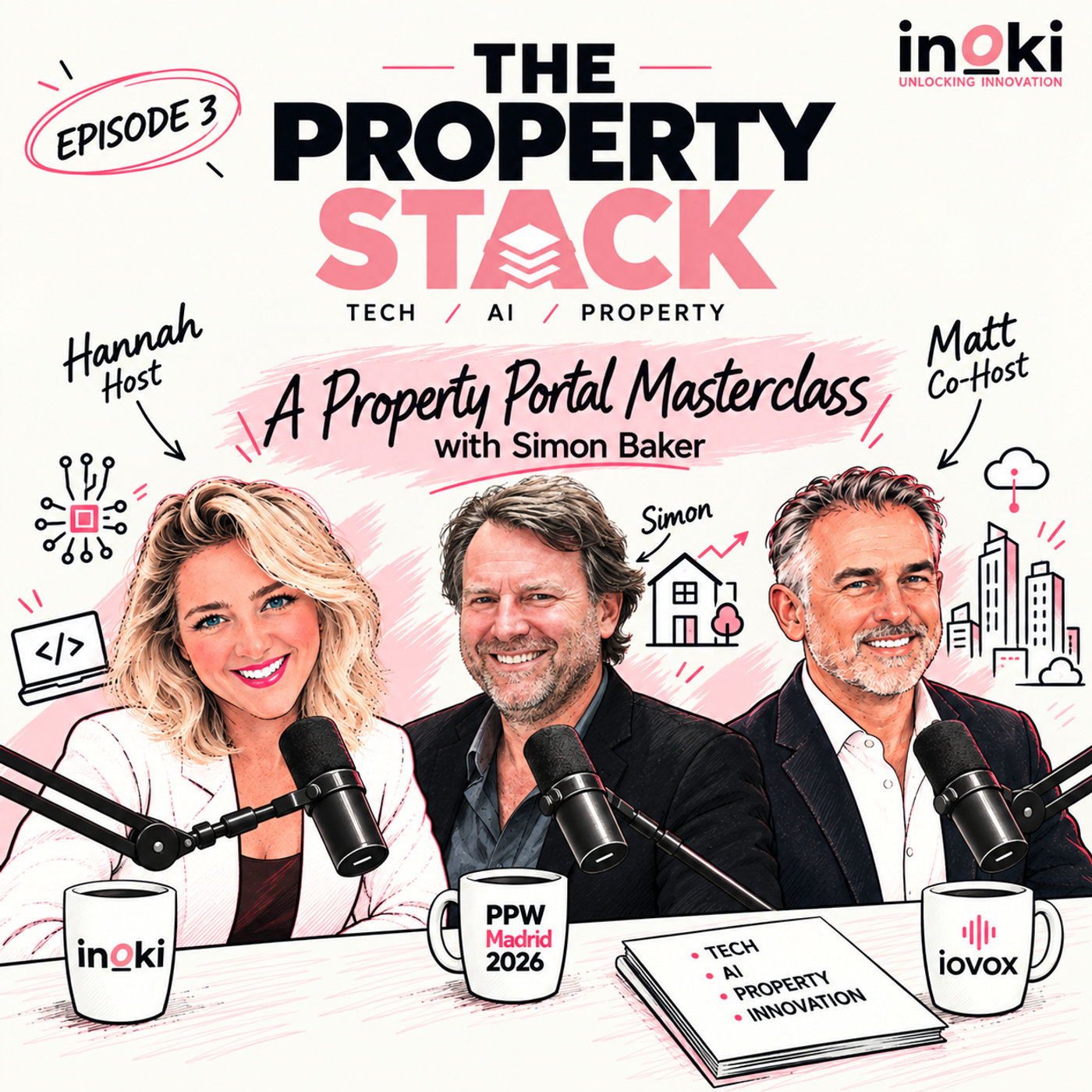
The man who wrote the portal blueprint. Former REA Group CEO Simon Baker on the wild early years, focus as a secret weapon, and why buying a home is still an emotional search.


“Simon, you know this is not a real business, don’t you?” That’s what Simon Baker was told as he signed off the investment in realestate.com.au, a stake now worth billions.
In this extended episode of The Property Stack, Hannah Parker and Matt Gayleard (iovox) chat to Simon, Chairman and founder of the Online Marketplace Group, serial tech investor, partner at Fusion 4 Ventures and the ex CEO of the REA Group in Australia. Simon is one of the most influential voices in property marketplaces, with a career spanning the globe. We take him back to those early days of classifieds, how he helped write the blueprint for the portal explosion and why buying a home is still the same emotional search today.
Recorded in Miami, ahead of PPW Europe, taking place on the 28th to 30th October 2026 in Madrid. For tickets, visit ppweurope.com
Guest: Simon Baker, Online Marketplaces Group and Fusion 4 Ventures
Presented by Hannah Parker of inoki.agency, sponsored by iovox.com
Hannah interview: what would be the one defining thing that you did at REA that made it what it is today?
Simon interview: Focus. The one defining thing was focus. their listing on the site. There was no reason not to. Therefore, we had to solve that problem. Because if I had all the listings, I had a reason for audiences to come to me. If audiences come and look, then they're going to generate leads. If they're going to generate leads, they are going to pay money. or the agents will pay money in that process. So the the absolute thing was focus.
Hannah interview: there's such an impatience to get to the shiny moments
Simon interview: it's a mindset. And that's what people invest in as an investor, which I am now, is I'm looking for those people who have got that desire to solve the problem, are gonna go to bed, think about it, wake up Work on it, go to bed, think about, just keep moving and moving, moving. Maybe it's an inch a day, three steps forward, one step back, and so on, until they've finally cracked the code and thus release value.
Hannah: Today we are very lucky to be joined by Simon Baker, the chairman and founder of the Online Marketplace Group, serial tech investor and partner at Fusion 4 Ventures. Simon is an advisor to some of the biggest property portals around the world. As an OG and ex-CEO of the REA Group, Simon's tenure saw revenue growth from around $4 million to over $155 million, and he's often quoted as defining the blueprint for how property portals grew around the world. Simon is always in a different country, doing deals, backing businesses, and finding the next investment. So we are very lucky to have pinned him down today in Miami, especially in the run-up to PPW Europe, which is set to be the biggest one yet, bringing together property leaders from around the world. We're really happy to welcome Simon to the Property Stack Show today. I'm Hannah Parker, and presenting alongside me is Matt Gayleard from our sponsor, Iovox.
IOVOX SPONSOR: This episode is sponsored by our partner, iovox the data and AI specialists. iovox tracks every lead back to its source and turns every conversation into a booked appointment or closed deal. I've used iovox myself over the years and honestly, they're just one of those no brainer tools that I recommend to nearly every lead generating prop tech business that I work with. For more information, visit iovox.com.
Hannah interview: Simon, thanks so much for joining us today. We are super excited to chat with you. And I'm just gonna go straight in with some of the questions that have been coming over to me when I mentioned to a few people that we were gonna have a chat today. And I really wanna kind of go all the way back to the beginning because you have had such an interesting
Simon interview: Yeah, I said that you have to check so it can't be it.
Hannah interview: career in this sector. But I wanna know like how... How did you get into it in the first place? I know you've had some history with McKenzie, I'm talking before the News Corp time. How did you get started on this journey?
Simon interview: it well it's it's pure dumb luck, to be honest.
Hannah interview: Bye.
Simon interview: right place, right time, or actually start off as wrong place, wrong time, end up becoming right place, right. So way back in late nineteen ninety-nine before you were born actually, or early two thousand, the the I was working at a startup in Los Angeles of all places in natural health. So you can see it's
Hannah interview: Totally different.
Simon interview: yeah, yeah, yeah, yeah. All right. So so what what happened was I'd been at McKinsey and Company, been doing some I'd left there, been doing some bits and pieces, and then a mate of mine said, we've got an opening for a CTO at a startup in Los Angeles. It's in the natural health area, and I've gone the what? Right, and then I've gone natural health, California. Well, this will be interesting. So I then I I then basically said, Yeah, sure, I'll go do it and it was myself, of other Australian guys and some local guys and a and a founder who was very different to all of us. And I literally got on the plane and went out and and and lived in Los Angeles about Lost strong track, maybe just under a year, nine, ten months. And because CTO and then and really helping build the build the business. And I learned very quickly that the CEO had no idea what he was doing. He was raising money, spending money. We were doing everything from Literally dealing with crazy Californian-based health people. We had a radio show. We had a website. We were doing buy, you know, selling natural health products. And I've gone, okay, this is really strange, burning through our money super fast. And I've gone, okay, I don't know what I'm doing here, and I don't think I really want to stay. And then then I got a call from a mate. Another ex-Mkenzie mate who was working at a place called News Interactive, which was News Limited Australia's online digital play. had been set up by Lachlan and Loughlin Murdoch. And this this mate of mine said, Come back, why don't come back? He had a strategy. He was the COO, there was another guy called Patrice Mackery, who was the CEO, and we're gonna build Jobs, homes, general classifieds, and so on. Type business for the Australian market based out of Sydney. I said, Yeah, I'll do this because I didn't like what I was doing. And ended up back at at in Sydney at exactly just before the Sydney Olympics. Funnily enough, so way back in about August 2000. And I'd literally been there ten seconds and I got invited into a meeting with myself. Loughlin Murdoch, Patrice Macri, who was the CEO. And then there was this a guy called John McGrath who was on the board of realestate.com.au, which is now the REA group. And they they basically said, We have no money. This is the REA group. We have no money, we're going out of business. Would you buy us or would you make an investment into us? And this was back yeah, back about then. And then I was and and and in that meeting there was like a okay, well look at it. Contrary to what you may believe in a book called killing fairfax. Quite what happened, and I was in the room, unlike the Hamilton musical, the room where it happened. And I got tasked with you know, should we make this investment into into what was then real estate dot com dot AU? So I I dutifully went, Well, I've been here thirty seconds, I Hmm, I don't want to get I don't want to stuff this up. I'm working literally with Lachlan Murdoch because he was then running News Limited in Australia at that point. And so I'm running around going, well, this is a good idea, and I'm trying to work out. And and the the business in those days was absolute mess. The guy who was the CEO, and I think that and I remember the I I'm not gonna name his name, but anyone who can go and find it out. The guy who was the CEO. Funny story. He was the Amateur kickboxing champion of Australia. All right. And he had a he had a face that looked like an amateur kickboxing champion, right? So he was he was yeah,
Hannah interview: diverse mix of people.
Simon interview: and and the funny thing was the reason he had the job is because he happened to be sitting next to one of the directors on a plane. And the director said, Well, can you go run, yeah, I'll go run this business for you? And he had no idea what he was doing, none at all. And
Hannah interview: So were you at that point the only person with real digital knowledge in that room?
Simon interview: no, no, no. No, no. Well the the the they were running this business called News Interactive. So they had a business called I'm gonna get it wrong. It's either career, one or my career. One was Fairfax, one was News. I can't remember, it's like twenty-five years ago now. which was on the job side. They had Home Store, which was their attempt home no, home home something, home away, home. I remember what it's called, right? Anyway, it was something That was their attempt at what REA does in a property portal. They had something in cars, which motoring.co I don't know. And then they had a thing called GoFish, which was their attempt at doing eBay. Right. So they'll basically try and do all these things and and dramatically failing in that process because it was a newspaper trying to do classifieds and online and and didn't know what they were doing. So I I was it was more of a case of I I I was the least corporate of them. Because I had literally just come out of a startup where everyone else there had been more in a more corporate structure. Even though it was a startup environment, it was still more corporate in nature. And so that's that's how it got involved. And then and and the the story goes that someone Lochland Lane Ford, this is a great idea, we're gonna do this deal. And the reality was he leant back and went, Let's have a look at this, because they're already pouring a lot of money. into News Interactive and they weren't really sure whether they wanted to then put money into you know more money into what w what was fundamentally is a very, very very baby listing that had not much money in the bank. We're talking basically a month, month, month and a half worth of cash. was run by a a a former Australian kickboxer or current no former yeah kickboxing guy and y with my very first meeting when I went to the business, they showed me a software product that you got on a CD ROM. This was all over it was literally all over the place. And then there's a guy called James Gray who who who now works with me again, who was working at REA at that time, or well realestate.com.au at that time. And I remember going out to their Sydney office. So at that point it was based it even though all the the the it was a Melbourne type company, because News Interactive was in Sydney, the Sydney office for REA was sort of That it was really a sales office, but they wanted me to go see it. And I remember going in there and it was in a place called North Sydney, Crow's Nest, if I remember North Sydney. And and you walked in and there was a big table in the middle that was like a mirror. It's like one of those things you snort cocaine on, right? It was like this big mirror table in this and and I'm going, How much did that cost? Right. So you're going out of business and you're running and and clearly the money was coming in and going out, and they were sponsoring. tennis things and so it was just this shoot darts at everywhere you can do and hope like hell you got a bullseye rather than a very clear strategic plan. At that at that point I knew that the underlying concept made a lot of sense, but the execution was not as good as it could be. And so I had to I then had I then spent I think about two to three months convincing people in news that they should invest The massive amount of two point two five million dollars cash, that's Australian dollars, and eight million dollars worth of marketing, which was really just rebranding in the papers and you could basically say that that's worth ten dollars or that's worth a hundred dollars and it's the same spot. Which proved to be A challenge convincing people to do what in hindsight, because now you've got you know, you f you flip forward a couple of decades and and that two point two five million investment, which was forty two percent, is now worth something like ten billion for them. Now everyone would do that investment in a heartbeat every day, but at that moment in time they couldn't see it. And and it took a lot of convincing, a lot of documents. And I've still got the documents. I've still got the the the the the the the the the PowerPoint decks that I put together to to convince the powers that be with was in those days a guy called John Hardigan or Peter McCord who was the COO or or Loughlin himself that this was a legitimate investment. Now the funny story is I remember going on a Sunday to to Lachlan's house in Point Piper, which is a nice part of of Sydney. And sitting there with myself and I think Patrice was there. This is like ten o'clock on a Sunday morning. sitting outside next to the pool of all places. you know, and and not clearly not sitting on lounge chairs, not quite like that, but at a table, going through a PowerPoint presentation on why they should be investing in this business, being grilled about this two point two five million investment, and eventually getting the yeah, okay, we're gonna do this. And then I had to go maybe later that week or next week or whenever it was, to the chief operating officer, a guy called Peter McCourt, to get him to sign the final contract so they can literally cut a check. Right, 'cause in those days we they wrote a check and
Hannah interview: Yeah.
Simon interview: you went to the bank and you put put it in the bank. And and Peter as Peter McCourt's signing the the the the the the The subscription agreement, because it was a listed company, it was already listed at that point. He goes, Simon, you know this is not a real business, don't you? As he's as he's signing this. And I went, Well, I'm going, well, I think it is, but what am I going to do? I just want you to sign the document. Thanks very much. So, yeah, that's how I got involved in this industry through a very funny set of circumstances that led to me championing the investment into. real estate dot com dot EU by News Limited, who fundamentally didn't want to do it initially.
Hannah interview: And the story from there just kept getting more and more interesting then after you got the hook into what became then this long career in marketplaces and classified. I saw something that was quoted where maybe it was a misquote where you'd said to them at the time, okay, this is good, but you've got to fire the CEO and employ me. I'm going to do a much better
Simon interview: Yep.
Hannah interview: job.
Simon interview: Yes. No, that was true. I so I went on to the board. Actually I went on to the board, was it an alternate no that's right. So so the the CFO said this is not a real business was
Hannah interview: you
Simon interview: put on was put on the board. But I don't think he was really interested in turning up. So I went on as his alternate. So I went to the board meetings. And you know, you you've you've convinced news to do the deal, and then you're sort of crapping yourself going, you know, if it if it does go pear shaped, that'd be a very short career with news. So I'm gonna keep
Hannah interview: you
Simon interview: a close eye on this. And what what I saw very quickly was the bank account, the two point two five rapidly headed towards one. A you gotta
Hannah interview: Hmm.
Simon interview: pay out all the bills, etc. that were were sort of hanging around. but then they weren't just they were just doing crazy things, right? I don't remember exactly things like We went we s well we did a bit of a deep dive a little bit later on. and we were finding that we're paying for the the the the former CEO's holiday in at a ski resort and rental of boats and so on, right?
Hannah interview: all of those rocks were unturned.
Simon interview: yeah, we we discovered a lot of really interesting bits and pieces when we sort of get into it. So so I was sort of going so I went to then chairman, a guy called John Nylon, and I said to John, look It I I we we're gonna problem, right? W now now we're we're gonna you know the problem's the following is the bank aghts going back down to zero, newsers put the money in, if news has put the money in and it goes back to zero, no one else is gonna put the money in. Why would they? Makes no sense. So we're gonna have to change the course of this business, otherwise you're out of a job. You yeah, we well you're chairman of a company that's gonna be bankrupt. I'm gonna be out of a job because news will have fired me and said thanks very much, disappear. so and I run this place for you. And this is what I'll do. Here's my plan how I would approach it. I'll spend time in Melbourne where the head office is. I commuted from Sydney to Melbourne for a while, and then I went back. I I'm from Melbourne, so it was easy, and I could then go back from there. And let's make this at least give it the best shot. If we're gonna go out, if we're gonna go out, let's go out intelligently, not lazily. And so yeah, so I did. I I put my hand up and said, no, I think I can run it better than this guy. The board agreed. The other guy terminated. I got appointed. Initially I got appointed as COO, if I remember correctly, for about two months and then I just went, guys, here's a few problems.
Hannah interview: Yeah.
Simon interview: No and then they went, Okay, yes, I think we I think we understand, Simon. Can you please fix it up then? Fix it up.
Hannah interview: And did, because after that, I mean, the story, it kind of goes on to like a big international injection of kind of international interest. When you went over from your time from America over, was there already kind of some stuff that you saw from Zillow who were not
Simon interview: It didn't exist.
Hannah interview: really starting yet? There was something else in them place?
Simon interview: No, they didn't exist. There was so back in those days there was a company called Home Store. Home Store was run by a guy called something Wolf. Stuart Wolf, maybe? Anyway, he ended up in jail. As they did
Hannah interview: Okay.
Simon interview: a they they I w I hope I can remember the story. It is a long time ago now. but he basically did a deal where he he they bought marketing over here who then bought marketing over there who then board advertising on the site. They did a like a round robin to artificially inflate the revenues of the business, it was you know, that's was part of the running games of the the the early days of of the dot com era where people were doing all everything and anything to make their businesses look great. And so they had that was Home Store, which was you know, they're the ones who ran realtor dot com in those days. there was no Trulia, there was no Zillow, they didn't all none of them existed. It was very we're talking about very early days.
Hannah interview: So there was nothing for you to draw kind of different insights or stuff from. You just had to go with gut. Without property backgrounds from in the team and knowledge, you just had to kind of go with more gut instinct of what was gonna work.
Simon interview: yeah. Yeah, the the the way the way I thought about it is I've got a business, yeah, my customers real estate agents, but I don't need to be a real estate agent to sell someone advertising, just like they don't need to run a prop how to run a property portal to sell
Hannah interview: Yeah.
Simon interview: real estate. Our job is to to coexist and work together in in in this environment. So that's what we did. We just found a way to work together and and and I took the knowledge I had which was spent five years at McKinsey and Company, so I I got to see a lot of businesses. I was doing with everything from airlines to concrete pipes to Siemens Nixdorf in Germany to all very range of stuff, right? So I saw big and small businesses and good and bad and just stuff in that process. And I just tried to pull
Hannah interview: And do you think that's kind of
Simon interview: that out.
Hannah interview: what drove as well like this? Because you quickly went in to look at like international opportunities, like, know, where are these different countries?
Simon interview: No, not no not so quickly. No not not so quickly. The the the going international was between two late two thousand and probably two thousand and five. So those four
Hannah interview: Mm-hmm.
Simon interview: and a half years was all about Australia focus and it was really boring. Boring.
Hannah interview: Hahaha
Simon interview: Okay? 'Cause it was like we got a subscription package, all you can eat. For a price. We're gonna put the price up every year by fifteen percent. Now nowadays they would love to be paying one
Hannah interview: Yeah.
Simon interview: hundred and fifty or two hundred and fifty dollars or whatever it was. And then we some extra bells and whistles to sell you, a feature property, a guaranteed top spot, and so on. And that's what we did. We literally for four to five years just did that. And we wanted to go from when I joined, it was about 1,250 agents. And we had to basically 10x that. It was yeah. So we had to go to about the 12 and a half thousand, which was the complete market. So for those five years, it was I knew what today was going to be, I knew what tomorrow is going to be, I knew what three weeks from now is going to be. It's, you know, dealing with clients who thought or customers who thought that paying four hundred dollars was way too much, even though we were starting to drive meaningful traffic. It was, how do I launch a new product? How do I sell a new product? How do I create hunters and farmers inside the business? So we did. Day in, day out. It became boring and routine, but That's what created the the foundation. And if you don't understand and I and I my son's to go to the entrepreneurial part and he has a little bit of impatience. Go on, sometimes it's really boring, like day in, day out, day in, day out, for not just a week, but talk about for months. That's how you get really good progress. 'Cause you wake up at the end of six or a twelve month block and you've gone a long way. And each day looks feels pretty much like groundhog day.
Hannah interview: Yeah, it's something that I think startups today really suffer from because there's such an impatience to get to the shiny moments of value that the kind of the boring stuff that actually makes the core of your business work is just that there's less interest in investing in it. So it's interesting to see how some things don't really change in that.
Simon interview: No, no, but I think it's the same for all business it doesn't it doesn't matter what your startup my son's startup is in is in DeFi world. and I'm going it it it it's just it's a it's a mindset. And that's what people invest in when when you when you th when you're as an investor, which I am now, is I'm looking for those people who have got that desire to solve the problem, are gonna go to bed, think about it, wake up Work on it, go to bed, think about, just keep moving and moving, moving. Maybe it's an inch a day, three steps forward, one step back, and so on, until they've finally cracked the code and thus release value.
Hannah interview: make it work. I want to come on to your investment stuff a little bit later in our chat. But one of the things like just from this kind of early start at REA, it was such a defining moment from what has shaped the rest of the industry. when I knew we were going to have this chat today and Matt and I were chatting about different things, I did actually reach out to some of our kind of common friends in the portal world who are some of the CEOs and kind of portal leaders from across the road. I won't name them because they did ask to stay anonymous. But one of the questions that did come up
Simon interview: That's not good.
Hannah interview: I'll tell you later, offline. But one of the questions that did come back was from someone who is, let's say a big hitter in top five portals of the world, who said, they were very intrigued to know if I said, if you could ask Simon one question, what would it be? And they wanted to know what would be the one defining thing that you did at REA that made it what it is today?
Simon interview: Focus. The one defining thing was focus. And by that I mean we knew that we had to get We knew we knew that there was no reason that any real estate agent should not put a lot of double negatives in them with a quadruple negative.
Hannah interview: Yeah.
Simon interview: Every real estate agent in Australia should put their listing on the site. There was no reason not to. Therefore, we had to solve that problem. Because if I had all the listings, I had a reason for audiences to come to me. If audiences come and look, then they're going to generate leads. If they're going to generate leads, they are going to pay money. or the agents will pay money in that process. So the the absolute thing was focus. Now the challenge is there's always a bright shiny light. There's always I I used to get phone calls from from from John Hardigan at at at news going, nine's just launched a new property portal. What are you gonna do about it? And and my answer was usually nothing. Why? Because you know I'm I'm at the front Behind me was like Domain and then there was, I don't know, I can't remember who was the color, but Real Estate View and a others, Ariwa. And these guys are at the back. So if I'm Domain, I'm a hell lot more worried than I should be. And if I'm Real Estate View, I'm even more worried because these guys have to get over all of us. And I knew if I'd built that, you know, high level of content, et cetera, and I didn't get distracted, then you know, we would we would deliver. great result, a great platform, then you can do a whole bunch of other stuff. Some will be successful, some will be failures, but that core business will keep just churning out the value and then give you the opportunity to experiment to succeed and to fail. So yeah, so that's that's the one thing I'll do is focus, focus, focus. Focus.
Hannah interview: I will move on from REA because there's loads more in your story, but kind of linking to what's happening today, I always look at some stuff across all portals and think like a lot of stuff runs in cycles. You just see things repeating itself and what you were saying there about focus on content, I think that that is something that runs across all years, all businesses. Like having the content is king for a lot of... almost all marketplaces. But for REA story, it's that I think the last couple of years, they've had a very interesting strategy of &A of where it's going. And the more recent moves in again, more into Europe and the very recent decision to go into Ireland and there, I think it's 35 % of distilled that they've moved into. One of the other portal leaders that also came with the question was they were very intrigued to ask you a question about your thoughts of this more recent acquisition by REA Group and whether that is a sign of them changing focus into more multiple markets and what that looks like for M&A in the future.
Simon interview: So REA has for twenty years been outside of Australia as well as inside Australia. So when I was there, we went into United Kingdom, Italy, Greater Luxembourg region,
Hannah interview: Dubai.
Simon interview: Dubai with Michael Michaelni and also Hong Kong, right? Not square yards, square feet, square foot. Square foot. Okay. And and and and we did that out of a combination of well, we could see becoming a very strong player in Australia and and and and and you know, you've got to question where you where's your next chunk of value going to come. Right? Yes, you can keep pulling the pricing lever, which is fundamentally what's happened over all these years. but what else are you gonna do? We tried home loans, we tried a whole bunch of stuff, very difficult to do them, and I think that's story's played out multiple times. around the world. so we went overseas. we made I think we did some good things overseas. I think we did some absolutely stupid things overseas. And I England, England was was one where we we bought the number three player called Property Finder at that point in time. And that became a headache for us. Right? It became a real headache because and we did it as a joint venture with News International, which is the news limited businesses in in in England. Is because I'm in Melbourne, it's in England. I've noticed there's a few time zones difference between the two. how how people how property is bought and sold in England is actually a little different to Australia, even though from afar it looks identical. It is actually different and it's subtly different in every market, and people forget that. and and then you're relied on whoever you put in charge in that part of the world to be aligned with what you want to achieve at the speed you want to do with the same. corporate values and that didn't work out. Yet you go to somewhere like the Greater Luxembourg region and goes, who, what, where? Super profitable little business. Right? Really run by a guy called Patrick Kirsten. Did an amazing job. Love what he did. And he's gone on to do some stuff in the the the the you know you you book a doctor online type stuff. Super good guy. So that went really well. We used to own, we bought and then you can buy well. So we bought Casa in Italy, although it got stuffed up and went from number one to number two. Now that's a big stuff up in this world. Okay. we bought it cheap for twelve million, just over twelve, twelve point seven, I think it was, million euros. that was a great buy and ended up getting sold for so much more is now part of Idealista. business. So it's been part through many hands. We did a very good, I think we did a whole bunch of good stuff in in in with Michael Agnani in Dubai. Now that is a good story. We we bought 51% of Property Finder for a couple of million dollars. Really not not a lot in the scheme of things. And it was growing really well and then once I left they decided that they wanted Michael to do stuff a certain way. They tried to exert he didn't like it. He was the forty-nine percent shareholder. They tried to get rid of him. He said, Well, you should really check out the corporate law in Dubai. You might not be able to do that. and he then bought it back for like $300,000. Now it's in billion dollar business. So imagine having fifty yeah, that this is where value can be d destroyed or created by knowing what deal you're doing. so so we've always been in that. Then they've bought into other things like REA India and so on, then you know, and and what we're seeing now, I think, is a recognition. that I don't have to acquire and you used the word acquire before, no, it's they've invested in. And there's a difference. So
Hannah interview: Yeah.
Simon interview: they've invested and they now own thirty five percent of distilled run by Eamon Fallon and yeah, they're great operators. I mean there's not good operators, they're great operators. They know exactly what they're doing. in fact Eamon was that was at our very first conference that we ran, the PPW conference back in two thousand and nine. I remember him being there. so so when you do that, you're basically saying, I want to ride the journey as a material player. I'm happy to give you advice and guidance, but I want you to keep driving the car because you know what you're doing. And that's what they did in India as well. They went from owning the businesses to converting it to a a a share in another company and let them drive the business, local players in local conditions. So I think there's some very strong lessons to learn out of that about You can go into another country, you can acquire a business, but now you've got all the upside and all the problems. So how do you create an environment where you've got access to some of the upside, but none of the problems? And that's what I think they're doing now, which I think Cameron and the team there are doing a very good job at thinking through that.
Hannah interview: Yeah, because there's been some other interesting investments in maybe R &D kind of investments like the GT investment. I was really intrigued with the Nebolitics investments or acquisition that they brought that in. think they brought that one in. It's just it's kind of creating this very interesting picture about what the opportunities are in the future. Now. with the recent one, perhaps the vendor paid advertising model that is established. Maybe there is a bit more of a learning and crossover what can happen. I think it's always very difficult for portals to go cross market. I think it's one of the very, very difficult businesses to do it. think probably only really like Michael at Property Finder has had a great success of going into different markets, but they've been different emerging markets with a sort of similar level of maturity and operating models, whereas all of the established markets, I don't really know anyone that's done it very well yet. to able to go across them. Is that something you think that they will struggle with to be able to like cross over learnings? Or will there be some things that actually will give them like new eureka moments that can cross borders?
Simon interview: Okay, so so I'm gonna challenge your premise a little bit. I think the idealista guys have probably done a good job going into Italy from Spain. And if you talk to the the Italian the the Italian guys, Immobiliare, run by Silvio, they've done a very good job with their acquisition of Spitigados in Greece and they've done a very good job at going into Spain because you come into my patch, I'm gonna go into your patch and do that. So I think those those ones are There are some good examples. I mean you you you can see Ada Vinta sort of assembled good assets but tried to centralize on a technology platform, didn't work, now they're broken up, and that's where distilled got put off and now then Adventur Spain got sold off to EQT and so on. and then of course Photocasa, which was a subsidiary, got sold off to twenty four. so I think there are some good stories out there, and then but I think in general w Everything looks easy from afar, but there are subtleties. So vendor paid advertising in Australia has been around for longer than I have on this planet. Well into the probably the fifties. I mean fifties. I'm I'm from sixty six. I was like it's been so long, so it's so ingrained in the culture and the psyche that no one really questions it. Doesn't get questioned. Doesn't no one no one goes, Well why am paying for this again? Yeah, you're gonna make a commission? Come on. Right?
Hannah interview: Mm-mm.
Simon interview: It's just you So yeah, I go I sign here and I give you a check and and it sort of just happened. But I think when you're trying to change culture and do things, you you have a problem. We've seen, you know, Hemnet has had some challenges in in taking that model to market. And distilled's had some success in doing it. But there's still distill you know, Ireland is not a massive market. We're not talking the size of Germany. We're talking a relatively much smaller market in both number of people, number of transactions, market dominance and upside potential. So I think it'll be I think REA will be able to provide some advice and guidance and learning. and and and I think the the team there will be very selective in what they bring on board and what they don't because they they are smart enough to go, you know, this works and this is not going to work in my market and And and I don't see them, you know, thirty five percent shareholders probably not gonna dictate the and I think that would be a mistake in that process.
Hannah interview: think there's more moves in their shopping basket for Europe at the moment.
Simon interview: I think like everything people will look, I mean you'd be crazy not to. You have an MA team. The MA team's gonna be doing something. Okay? We got we all everything comes everything
Hannah interview: They've been quite busy.
Simon interview: comes down to you got you you create a team, you put people in the team, they're gonna do stuff, whether you like it or not. And they're gonna look for opportunities, whether it is mortgage type stuff in Australia, whether it's going to be investments into things like JIT or whatever it is, which I I see I see that's more of a I'm gonna invest into an R and D team and see what the hell happens. Okay. I d I think I think Jitty is is it's the challenge for Jitty is how do you become a real business? How do you get you know material growth in revenues profitable and then become a potential challenger in
Hannah interview: Yeah.
Simon interview: that market or at least a relevant player.
Hannah interview: I mean, I really like the product at Agiti, but I think that they have some challenges with the monetization. was a recent quote actually from Brian Chesky, the Airbnb CEO, who just basically said, like, anyone can now vibe code an AI search function. The challenge is to make
Simon interview: Yes.
Hannah interview: money. And I mean, obviously that's not the exact quote. He went on to talk about like their new releases with Airbnb, but I think it's really driving home. Like the first, mean, what Jitti did was first move into really making a move in kind of Europe as to like making more of this AI native search. Unfortunately, so many replicas are just coming out of the market every single day. It's who's going to stick around are the ones that actually can then turn that into a holding monetization model. I know it's something
Matt Gayleard: as an model and I
Hannah interview: that Matt and I see when we've been talking to like different kind of prop techs and startups. So on the lead generation side is you can't just forget about the user after you've made a beautiful search. It has to actually flow through and how can you then have turn those leads into value further on down the transaction journey.
Simon interview: is premised on one thing. You have to have an audience. I can have the most beautiful, well functioning, highest converting on the planet. If no one goes to it, who cares? Like fundamentally, who cares? And the challenge for any person, any business starting up today is that you're dealing with people who have had p companies that have had twenty to twenty five years. actually twenty five years to thirty years experience and the experience so well brand building And and if you go to United Kingdom, I think everyone knows Wright move.
Hannah interview: Mm-hmm.
Simon interview: Okay. Now that that's a function of being around thirty years, but it's also a function of using Ian Wright in two thousand and one, two, three.
Hannah interview: Yeah.
Simon interview: to to A at a w at at the height of his fame and as a player, and B when when it just at that it was the it was the the moment that it it sort of solidified in in people's minds. Go to a Germany, Scout twenty four. Everyone knows Scout twenty four. So yeah you got Kleinerzeiden yes you got Emoville but they're all the th they're never going to be able to truly challenge that leadership position. It's gonna be very I mean no I should say never never they say.
Hannah interview: guess one thing that's
Simon interview: Highly highly unlikely.
Hannah interview: challenging that at the moment is the risk of agentic browsers who don't care about brand. And I know it's something kind of we've talked about, it's been covered in a lot of the conferences, you know, about what will happen. There's been kind of some... AI washing that's gone in, like, you know, it's suddenly going to change the world. There's been some reality with reports that have come out saying, you know, it's affecting one to 2 % of traffic. Like, you know, it's not really moving, moving the needles of anything risky at the moment. But the more and more we see from maybe outside of the industry, the rise of, you know, things like dots and muse and gobbots that are coming out to say, you know, people will have, there's been, I think, open AI released like some saying you know in a few years time everyone will have an agent that will do their work for them online. So if that prediction does come true and now kind of agentic use of a website will sit alongside the human, is that brand really going to have the strength anymore?
Simon interview: Yes, it will. And and and I think no, my hypothesis is the following. We we tend to put everything into one big bucket and call it search. I need to get a the cheapest pens possible, I need to get a new iPhone, I need to Yeah they're not all quite the same. ends, airpods, phones, doesn't matter, TV. It's all I don't I cannot be bothered. I know roughly what I want. I bought a new monitor the other day. Right. I I I don't care. It cost me a hundred dollars, right? I just needed it delivered as fast as possible to replace the one that broke. I have no emotional attachment to it. It's a transactional search. That's where I'm happy to go to an agent and go, I need a new It's a Dell monitor, whatever size is, twenty six inches. I need it, SAP, and I want to pay the cheapest price. So it's got to be available, fast, cheapest price. Find it, put it in my shopping cart. Add if you ha if you can add my credit card details, press the button. If not, I'll add my details and and I just don't want to think about it. And it materializes at my front door twenty four hours later or less. I don't know too many people who buy their home. Transactional vibe. That that's not so there's a transactional search and an emotional search. Buying a home is an emotional search. Biggest asset. 99.9% of people on the planet's gonna be their biggest asset they ever buy. Two, they're not making the decision. It's in this case it'd be myself and my wife and my dog and my kids and my parents if I was younger and so on. Everyone will have an opinion. The opinion may not be about the house, maybe the location, it may be the schools. There's like thousands of variables that fit into this emotional search. Plus, I don't know too many assets I live in. I spend a material amount every day. I guess you could argue your phone. You a lot of the people nowadays
Hannah interview: you
Simon interview: spend way too much time there. But the house is your security. It's where you feel probably your most natural and most relaxed. You get in the car, you drive out, you're worried about this, that and the other thing happening, and so on. So so and and there are high transaction costs. So here in the US it's you know percent. In the United Kingdom it's one one to two ish, more like one than two. If you're going to other markets can be three, four or five. But the point is it's such a different process. And you're not buying for ten minutes. I don't like this iPhone. I can probably go trade it in. I could go to a Samsung or whatever and it's a pain. But it's not, my God, I'm in this house for the next ten years. So we forget that that's an emotional search. An emotional search takes time. And as part of an emotional search is a fear of missing out, FOMO. I cannot afford to say yes to a place that's not perfect, or I could have found a similar one that was maybe five or ten percent less, because five percent of five hundred thousand is twenty five thousand dollars. That's twenty five iPhones. Okay. It's it's just we're dealing with massive differences. You're not going to hand that over to agentic search bot, go just go do that. Because you going, how do how do I know? How do I know that they've returned everything? Now the problem is we're now getting to see a lot of these agentic or LLMs give ridiculous answers. I mean I was I I use I use Clawed all day every day for tasks. But I always add, my last stain says, please double check your work, run this again. yeah, you're right. I didn't see that. I didn't I'm going, yeah, what? And I was getting into some some re reviewing a contract yesterday, and I've gone, no, I don't think that's what the contract says. Please read it again, and I think it says this, and it goes, yeah, you're right. So if if we we don't inherently trust it. If we don't inherently trust it, Then we're not going to rely on it to give us, you know, you're, you know, there's all these houses you could buy, but you know, we you so well we're gonna give you just this amount to look at. And ninety nine percent of people are gonna go, yeah, but what about these? So I think what it becomes is your co pilot. So I will have my rightmove, I'll have my scout 24 I'll have my idealista my REA, whatever. I will be searching and then I'll go, I like this house, drag, drop, put it into claude and say, okay, what can you tell me about this area? What can you tell me about other houses in the area? Are are there any zoning issues? is there any problems like you know, if I'd known I've got I got I got a sinking backyard here because I've got sand based, right? Yeah. All these sort of things that you you don't inherently know. So at best it'll be your co-pilot that you can talk to, non-emotionally. About what is your biggest decision before you have your emotional conversation with your family or whomever or the bank, right? Maybe it's it's co-pilots helping you with the bank prepare documents and so on to submit for mortgages. I think that's really how it will work in an emotive search. Very, very different to a transactional search.
Hannah interview: Yeah, I agree, but I also think that the change is going to come, like our usage of this will change much faster than it has done previously. In two years' time, I think it will be... exponential the difference between what we expect it to do now. So having an assistant to run things that knows all about you and can do a lot of the discovery and initial research work for you, then it's around like are they taking that information because the portals still want to be involved in the transaction so they still want to be relevant and they still want to be the place that provides the best information so that you go back to that place. Because if a listing is on multiple different portals including the agents websites where are you going to go back to do a transaction Like where will Matt and his team see the lead generations coming back through to answer the right questions? Are the portals that win the ones with the most content or the ones with the most information about all of their content so that they are the place that can answer the most questions to be in the middle? Where would you put your bets on content or on richness of that content?
Simon interview: Well, as it it's clearly needs to be as much information as possible. the way I view it is I'll keep asking you questions if you give me real answers. True, real answers. If you give me an answer that I don't think is quite right and I find out it's wrong, I'm gonna start to question everything you give me. When I had this conversation two days ago with someone who's using Chat GPT. And and now the comment they came back to me was, yeah, I don't trust ChatGPT. All right. And I said, No, you've got to set it up properly and I and say it before you give me an answer, double check. Right? But they don't know how to do that. That's not why would they? They just this is meant to be the answer to everything. And I think that's the problem is trust. Now the portals, it's it's much easier to trust a portal who's been giving you We've got all the listings in the market. Right moves, I've got a good, I've got all the listings in the market. They probably don't. But they got 97%. And the other 3%, even it's 95%, doesn't matter. The other percent, no one knows what 100% is. It's not like you've got anything to measure against. You might walk down the street and see a house for sale and you go, look at that right move, I can't find it. And you go, well, then you then you ask the question, maybe it's not for sale. But you're not questioning right move not having everything on it. The challenge is when you are day-to-day interacting with an LLM and becoming your your your not only your source of information but maybe your partner for quest for questions and having long conversations as as my wife does with it. Okay. And at the end of the day, if you if you're not comfortable that the answers they're coming back with are accurate, then you're gonna have doubts. And I just think the bar gets raised so high when it's you're gonna go to a bank and take out a loan for, you know, four hundred thousand pounds or five hundred thousand dollars, or it doesn't matter the amount. That means that you cannot stop working working. You are on the treadmill. Okay. So you better make sure that that loan is against a house that's really gonna meet all your requirements and you're not gonna discover it's got, you know, a sinking backyard or as I've discovered, broken pipes out the front. And I I've had the house for a while now, but I've just discovered broken pipes out the front in the gardening system. Okay. That look like the Bellagio fountains when they cut uncovered Okay. my God.
Hannah interview: nice so the currency becomes trust
Simon interview: Trust is is very important. Now, how do you build trust? You build trust over a long period of time. Who's got the brands that have been around a long period of time, been doing the job and the job they've been doing is actually very simple job, right? Aggregate, display, send a lead to an agent. are the right leaders of the world. So they start at pole position. Yeah. Formula one terms. They start at the at the at at the best position. And then everything else, everyone else is going to have to close that gap. Now the problem with the L LMs is that they are not just about one topic. They're about many, many topics. So it just takes them to get a get a few questions wrong. Hallucinate a little, guess a little, not want to admit they don't know. Okay. Yeah, I had a ridiculous thing the other day. I got I got a I got a diseased plant out the front, went and took a picture. Okay? And I said to to to Claude, I said, Well, t tell me what you think is happening here. Well, it's like this, you better go and do this and do this. And I said, Can you check again? yeah, maybe it's not that. And I've gone, don't give me the the the the the What what feels like a knee jerk reaction without thinking about it. We just we just assume that they've got all the knowledge and they're gonna come back with the one answer. And this one ha this came back with the answers. my God, you got a disease, you better get the pest control, you gotta get this, gotta take the plant out. And I've gone, Really? Really? It's not like, you know, COVID's come again. It's
Hannah interview: It's a great intern. AI is a great intern. So if you outsource your stuff to an intern, you have to expect to give your expertise on top of that. It's why I think good people become better and bad people become worse when they're using it because they'll just get the positive
Simon interview: Agree.
Hannah interview: affirmation. I think
Simon interview: Yes.
Hannah interview: it was Mal McAllion that we had on the podcast and he was like, look, just because you can, doesn't mean you should. like, you know, that just should be applied to everybody that's that's trying out. And I know that kind of Matt myself, Simon, I'm sure you see 10 times more than us see a huge amount of new AI features coming into portals like very recently. And I know something that that that will be covered quite a lot. I think at the upcoming PPW conference in Madrid, I think AI will be a hot topic as it kind of has been more and more and more over the of course, of the past few conferences, what can we expect a bit different from this conference that's coming up in a few weeks' time?
Simon interview: So the first we're coming up on the twenty-eighth or the thirtieth of October. a couple of things. One is full house, so we're we're we're closing in on five hundred attendees. all the major businesses are going to be there. I mean, I just had some people sign up from REA coming out from Australia because they want to be there, domain's gonna be there. I mean, that they're coming halfway around the world, not for you know, to have great, you know, tappers.
Hannah interview: New Zealand too. You've got Sarah
Simon interview: New Zealand. I
Hannah interview: from New Zealand.
Simon interview: know got New Zealand. Yeah, yeah. We've got everyone coming from from from really all around the world. Yeah. Kenneth and and the guys coming out of Thailand just two days ago. But the whole point is a very good networking experiences which we always have. It's just a bigger group and more connections that can be made. Two, I think the the quality of of of presentations are going to be once again outstanding. We're going through and we're we're we've got that that real issue we always have. month out, just under a month out from the conference of how do I get all the right people on the stage at the right time and in the right order. And and a lot of the topics
Hannah interview: Thank
Simon interview: which is a headache, but it's a good headache to have. We've got everyone from from really good, large European players who are talking about their business. I've got Silvio Bagliani who runs Immobiliare is going to talk about the business. Simon Bray who runs Kleinozyton talking about the business and the challenges they're having. how AI works in the business. got the guys from Vend talking, Francesca. yeah it's really, really good hands-on operators talking about issues. Not a not not just fluff and stuff. I've always this is our I think it's our 40th. We've been doing it since 2009. And and and and we've always said if we're gonna do this, I just want to have interesting topics that keep me awake for three days or two and a half days. And engage me in that process. That's the most important thing.
Hannah interview: One of the questions actually that came from when I, know, what would you like to ask Simon? Feeba actually came from in the house. It came from your house from Edmund who said, I've always, he said, I've always wanted to ask Simon is like, there is so much content at PPW. Like, you know, I know it's exhausting, but in a great way, like your brain at the end of the night is is because there's so much amazing content, but there's a lot to go through. It's packed. And he said, I want to ask Simon is how do you sit through so many different presentations and are able to stay engaged throughout every single one of them with everything else going on? Because after every presentation, you come up on the stage and you're able to ask really detailed questions about that presentation. How do you do that?
Simon interview: drugs. No, clearly not drugs. I think after after
Hannah interview: You
Simon interview: nearly nearly thirty years in the industry, whatever it is, twenty twenty six, twenty seven you you you either li if what the hell am I doing if I don't like this thing, right? I love it. That's the first point. Second is I'm always looking for something interesting and new. So for example we've got Raider Ali Khan from Du Bizzle Group. Now we've had them talk at the conference maybe maybe four or five times over
Hannah interview: a great talk.
Simon interview: over Yeah, well they've over the last 15 years. And and it's and I like it because I go back when they probably first spoke back in 2001, sometime around there, and they're talking about X. Now they're talking about completely different. And you get to see how this business has transformed over all these years. So I love having those sort of presentations and it keeps me engaged because I'm seeing transition over time. And I've got new people talking. I've never I've never met before, got no idea. I don't really know what they do. I've sort of read the blurb, maybe Ed's found a a a good person to speak, or Harvey. I've read up a bit, a bit. Then I'm like, I wanna know what you're doing. And I think honestly, if you can't pay attention, like l I'm thank god I'm not my kids, they've all got A ADHD. I'd be I'd be screwed.
Hannah interview: Yeah
Simon interview: you g yeah, you're only paying attention for twenty minutes on someone telling you a very that they've put their heart and soul into. I think I can
Hannah interview: Well, it's very impressive. I
Simon interview: Get engaged.
Hannah interview: will agree with everyone on that. Matt, you go to lots of different events like this, and I know you've been to a few of the PPWs as well, and you will be there in a few weeks in Madrid. I'm going to ask you a slightly different question on this because it's something that came to me when I went to the APAC conference earlier this year, and I saw way more actual real estate people come to the audience. were brokers there, there were people from different, kind of on the estate agent side. And it always strikes me as this is so valuable on the broker side for them to actually see what's going on. on the flip side of the coin. And Matt, from your side, like, what do you think the benefit is from what you see of someone on the other side of the industry, so someone that's actually sat doing the deals, what they would get from it?
Matt Gayleard: I think it's perspective. I think I I think I've got a few thoughts about the conferences. I especially this one is and and on this c I think it's the first time I've done a podcast, but I haven't actually said a word in an hour, so thank you. it it's it's a masterclass. You you are just quite often as a C-level, you are too often the smartest person in the room that you're in. at this conference you are definitely not. You're very rarely the smartest person on the table where you're sitting. So I think your peer group, it's not just the networking, you know, you're you're around people who genuinely have done exciting and amazing things. So just being in that proximity raises everything, which I think is really important. I think getting the chance to come out of your day-to-day business, and what I often find in these conversations, it's an equal measure of space out of your day-to-day business to actually think big thoughts. You're being stimulated by all this interesting Stuff that you didn't know, and a bit like you, Simon. I just find it really interesting. I just it is a bit of a stamina that you can sit there, but if you can watch a box sell Netflix, this is much more interesting. Yeah, you can sit there and just you're just learning and learning and learning and making notes, and it would just keep popping up days and days later. See, so I think it's a kind of combination of it, just gives you perspective, it gets you to pull up, and you go, I I forgot I knew that, or I hadn't thought about it like that before, or I had never even would have dreamed of thinking about that, and you're just surrounded by people that you can go and have a conversation with them afterwards. So I I just think it is a you know it's it's a university degree in three days. You know, my my kids are at uni now, they go in for like a day and a half a week for three years. You know, this is what the amount of
Simon interview: Day and a half.
Matt Gayleard: apparently they do homework. but you know it's the you know the the sheer amount of content and information But you s like you just said, Simon, some really smart people have thought really long and hard about what they're gonna share. It it's just distilled goodness. So I think yeah, it is hard to take it all in. But I think you just gotta, you know, strap in and sit through it and I think it really is like I said, it's a master class, I think. And I think if you're doing that from another sector and I'm lucky I get to do this for several sectors, yeah, you just keep expanding your your knowledge base and you realise that Actually that's a lot like that. Well, I hadn't connected those dots before. So getting out your day to day and just learning new things and around smart people is probably hard somehow. And if you're presenting,
Hannah interview: Give me a...
Matt Gayleard: it's good for adrenaline. It's definitely it does raise the it does raise the stakes
Hannah interview: It's terrifying.
Matt Gayleard: of your own performance as well. Although some you're just on the whole thing, that's easy. So
Simon interview: No it's not. No no no. The the
Hannah interview: It's terrifying.
Simon interview: the way to the way to think about it and and Hannah, I know you're you're you're you're presenting this year's conference. looking forward to that. The the
Hannah interview: Yeah.
Simon interview: the way the way to view it is you probably know your topic better than everyone else in that room. And you certainly know the slides better than everyone else in the room. 'Cause you create them. So there's no no need to be terrified. Is you're you're here just to to go and share some knowledge and some understanding. And for that for that moment, for that twenty minutes, they're like, Okay, I just want to learn. That's not terrifying. That's actually quite empowering. When you think about it. And so so pfft
Hannah interview: It is. It's the stage fright. Because it's a room, it's a room full of, you know, people that I admire and you always, you know, want to make sure you do a good job. It's, it's definitely a, like you said, think, Matt, you use the word masterclass. Like it definitely is like there is so much that you can get out of it. If there are some tickets available, Simon, I think.
Simon interview: We do. We have some tickets left, of course. Of course have tickets left. I'm always gonna have tickets left.
Hannah interview: How do they get, if someone's listening and they want to get...
Simon interview: W dot ppw europe dot com. We can't make it any simpler. Ppwep
Hannah interview: Ha ha!
Simon interview: dot com. Go there, you find out of the speakers, the agendas with as I said, the agendas give me a headache. But it's gonna go up today 'cause I'm told I'm gonna be murdered if it's not done today.
Hannah interview: There's always, I always love the last minute surprises of speakers that come in at the end.
Simon interview: there is look look look, for the last three years we've had CEO of CoStar
Hannah interview: amazing people.
Simon interview: Andy Florence be the last minute surprise.
Hannah interview: Yeah.
Simon interview: I don't know if he's coming this year. I've reached out to them but they're they're they're they've got busy with some some some roadshow, which I can understand why. So hopefully, yeah, we'll we' we're we're we're plowing away on getting some more speakers. And that's how that's our job, right? Is is get
Hannah interview: good, well I look forward to it. Yeah?
Simon interview: and get either people who aren't registered to register Those who aren't already up for speaking to come and speak. And we we try to put on the best show.
Hannah interview: I definitely love to see more property people as well, I think there's loads that you can learn. Final kind of quick fire question, if you weren't doing this, what would you do? What would you be doing now?
Simon interview: Sleeping.
Hannah interview: Not this podcast. If you weren't doing in the world of marketplaces, different career.
Simon interview: I I no no no it's not that late. I'll still be sleeping. my god, no way I have no idea. That one I've got no idea. The answer is it'll be down some other big rabbit hole that I had no idea I'd I was gonna go into and I'd be probably spending this
Hannah interview: Alternative healthcare maybe still.
Simon interview: Maybe not. I can Yeah yeah, I don't know.
Hannah interview: Cannabis Farms in California. And any top product that you've used recently that you think doesn't have to be related to this industry, like anything, any top product that you've used recently that you wow, that's really cool.
Simon interview: it's you know, honestly it's just AI. I mean I I'm I'm a big fan of Claude and it's and it it's because I keep you know, I'm we're we're doing this agenda and it's now the the the the the all we have to do is before it used to be a lot of manual work around doing agenda. Okay, we're gonna put this person in this slot so you end up you're cutting and pasting and you're what now it's like I wanna put Mike Vander Heyden here. The data's in there. Thank you very much. No, I think we're gonna move him till later in the the thing because it's gonna balance better. Moved. So so so it it's just freeing up my capacity to think rather than do. Which means, you know, I look at my day yesterday and I was probably working on four or five different projects, one of which is the conference, and I got material headway on all of those projects because AI allowed me to, you know, we're helping a a company sell it, sell at the moment, 'cause you know, with my with one of my with Fusion Four Ventures, which I do with Gonzalo del Positado Spain. We had to we had to write a process memorandum. Now historically that's like half a day of stuffing around. Here's the process, the timing, etc. Nice, grab an old one, update. Took fifteen minutes. I've gone, so so the same level of thinking I used to do, I'm doing today, the level of doing is now shrunk. And I spend my day just talking to Claude, hey Claude, change this line, add this point, change the tone a little bit. Done. Cut pace done.
Hannah interview: Voice. Voice is your app of choice.
Simon interview: Yeah. Whisper. If you if if you want a product, Whisper. W R H I S P R. There's no E.
Hannah interview: I will caveat that they've had a huge amount of data problems over the years. would carry out that like, be careful, like great product, but do they, you know, they have, they have had
Simon interview: have they? Okay. Don't use whisper. Okay, no, but no no Okay, well we we we we Yeah but
Hannah interview: their troubles.
Simon interview: Okay. Well, okay, well on I think on that point I'll I'll I'll
Hannah interview: Hahaha
Simon interview: go back to using Apple.
Hannah interview: you Thank you very much. We kind of let this one go on for a little bit longer because it's just, you've got so much interesting things to say and interesting stories. So thank you again for your time. It's been wonderful. I look forward to seeing both of you in Madrid, where we will be at the conference in a few weeks. Hopefully everybody that's listening will also be attending and coming down. And if you've got any questions, then reach out to the PPW team and they can help you out. Thank you once again. You can now feel free to go back to sleep, to enjoy the rest of your day over in Miami and work on that agenda. Yeah, yeah. Be nice
Simon interview: Agenda.
Hannah interview: to me. Matt, thank you so much. Yeah, thank you.
Simon interview: Last slot Friday, right?
Han end pod: Thanks for listening and thanks to Matt and all the team at iovox for the questions. If you're working in property or tech and want help with growth or product innovation, then talk to me, hannah at inoki.agency Otherwise, see you next time. subscribe and like.


Chairman / Partner / Investor / Advisor
Simon is the founder and chair of the Online Marketplaces Group and Property Portal Watch, a renowned advisor and investor, partner at Fusion 4 Ventures and the former CEO of REA Group. During his time at REA, revenue grew from $4m to $155m and the blueprint went on to be copied by portals around the world. On The Property Stack, Simon talks about the wild early years at REA, why focus was the secret weapon, and why buying a home is still an emotional search.